We know what works
Let us apply our 50 years of experience to the WASH problems you face
Tool Design
Creating effective tools and methods to solve problems and increase efficiency
IRC Consult has a vast amount of experience in developing tools and guidance for technical staff within national governments, NGOs and donor agencies, as well as the experts and consultants supporting them. Most of the tools we develop provide a useful model or starting point for more tailored solutions. We specialise in tools to lead sector-level change processes to ensure sustainable WASH services; tools to analyse what's working and what's not and tools to design solutions to specific service delivery challenges.
Our most recent tool design work include
- The Faecal Waste Flow Calculator to determine faecal waste volumes along the entire sanitation service chain, allowing the user to determine where the biggest losses are and thus where interventions should be targeted.
- A suite of costing and budgeting tools - developed with our partners Water For People and Aguaconsult
- The Asset Registry Assessment Tool helps you to plan for rehabilitation and other capital maintenance expenditure, based on the data you enter on the state of the infrastructure in your district. It tells you which water systems are at risk and which components you should consider replacing or maintaining.
- The Cash Flow Analysis Tool can be used to analyse cash flows of service providers. This tool helps you to create an overview of your income and expenditure for the coming years and to analyse if you have enough resources to cover your costs and, if not, which elements in your planning you should adapt.
- With the Direct Support Cost Tool you can calculate i) the actual direct support expenditure per person, ii) the required direct support costs per person, and iii) the gap between the actual and required direct support expenditure per person in your district.
- With the Financial Overview Tool you can create an overview of your revenue and expenditure at the service authority level (i.e. district as a whole). You can calculate the gap between actual and required revenue and expenditure and analyse the various expenditure components and revenue streams.
IRC Consult is interested in joint work on tool development. Our staff is available for both tool design as well as tailor made trainings on the use of our existing tools.
IRC has many years of experience in developing approaches that work; data gathering, costing, appraising and designing programmes and systems
We know what works
Let us apply our 50 years of experience to the WASH problems you face
We know what works
Let us apply our 50 years of experience to the WASH problems you face
Evaluation
Learning what works so you can adapt to improve
We know what works
Let us apply our 50 years of experience to the WASH problems you face
Monitoring
Tracking of WASH service delivery is essential
Content one
IRC Conusult has build up a track record of supporting the development and expansion of national WASH monitoring systems in Ghana, Uganda, Ethiopia and Honduras. As part of this work IRC has developed tools and guidance on:
- Developing or strengthening a national mon
IRC Conusult has build up a track record of supporting the development and expansion of national WASH monitoring systems in Ghana, Uganda, Ethiopia and Honduras. As part of this work IRC has developed tools and guidance on:
- Developing or strengthening a national monitoring system - helping stakeholders to define the purpose of monitoring, indicators, institutional arrangements and financing mechanisms;
- Defining indicators to measure service levels for water and sanitation and the performance of service providers and authorities;
- Selecting appropriate ICT platforms and tools; and
- Defining institutional arrangements for monitoring - determining roles and responsibilities as well as the information flows between different actors involved in collecting, analysing and using monitoring data.
IRC is a star in monitoring reallystef smits
Juste Nansi
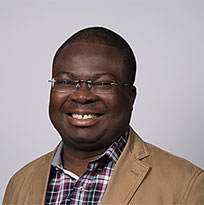
Juste Nansi is trained as agronomist, specialising in rural development. Currently he leads IRC’s programme in Burkina Faso and coordinates interventions in West African Francophone countries.
Juste has 15 years of experience in development cooperation of which 11 have been in the water and sanitation sector. His focus is institutional development and governance at both local government and national government levels in order to adequately deliver sustainable water and sanitation services. Juste’s work includes:
- Generating solutions (through action-research);
- Providing technical support (through advisory services, training, facilitating of learning, studies, strategy design, planning, programming, and policy development) and,
- Advocacy (enabling social accountability).
His focus group covers key stakeholders in the delivery of WASH services (private operators, non-governmental organisations, civil society organisations, community based organisations, local authorities, national authorities, donors, training centres and research centres).
His professional experience includes the countries of Benin, Burkina Faso, Mali, Mauritania, Niger and Togo. He has worked for several clients, including the European Union (EU), the United States Agency for International Development (USAID), the Agence Française de Développement (AFD) and Denmark's development cooperation Danida.
Juste is a native French speaker and is fluent in English.
Juste Nansi is trained as agronomist, specialising in rural development. Currently he leads IRC’s programme in Burkina Faso and coordinates interventions in West African Francophone countries.
Juste has 15 years of experience in development cooperation of which 11 have been in the water and sanitation sector. His focus is institutional development and governance at both local government and national government levels in order to adequately deliver sustainable water and sanitation services. Juste’s work includes:
- Generating solutions (through action-research);
- Providing technical support (through advisory services, training, facilitating of learning, studies, strategy design, planning, programming, and policy development) and,
- Advocacy (enabling social accountability).
His focus group covers key stakeholders in the delivery of WASH services (private operators, non-governmental organisations, civil society organisations, community based organisations, local authorities, national authorities, donors, training centres and research centres).
His professional experience includes the countries of Benin, Burkina Faso, Mali, Mauritania, Niger and Togo. He has worked for several clients, including the European Union (EU), the United States Agency for International Development (USAID), the Agence Française de Développement (AFD) and Denmark's development cooperation Danida.
Juste is a native French speaker and is fluent in English.
Our priority as developing countries using external aid must be on building our systems with the ambition at a defined horizon to no longer rely on aid but only fair exchangesJuste Nansi
Juste Nansi is trained as agronomist, specialising in rural development. Currently he leads IRC’s programme in Burkina Faso and coordinates interventions in West African Francophone countries.
Juste has 15 years of experience in development cooperation of which 11 have been in the water and sanitation sector. His focus is institutional development and governance at both local government and national government levels in order to adequately deliver sustainable water and sanitation services. Juste’s work includes:
- Generating solutions (through action-research);
- Providing technical support (through advisory services, training, facilitating of learning, studies, strategy design, planning, programming, and policy development) and,
- Advocacy (enabling social accountability).
His focus group covers key stakeholders in the delivery of WASH services (private operators, non-governmental organisations, civil society organisations, community based organisations, local authorities, national authorities, donors, training centres and research centres).
His professional experience includes the countries of Benin, Burkina Faso, Mali, Mauritania, Niger and Togo. He has worked for several clients, including the European Union (EU), the United States Agency for International Development (USAID), the Agence Française de Développement (AFD) and Denmark's development cooperation Danida.
Juste is a native French speaker and is fluent in English.
Our priority as developing countries using external aid must be on building our systems with the ambition at a defined horizon to no longer rely on aid but only fair exchangesJuste Nansi
Joseph Pearce
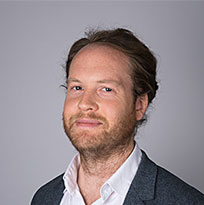
Joseph leads IRC’s Sector Monitoring content area and his work is focused on strengthening government monitoring systems for water and sanitation.
Joseph is well prepared, detail-oriented, thoughtful, inquisitive and willing to change his mind if presented with a compelling argument. He is committed to strengthening government monitoring systems for water and sanitation and holds an understanding of critical issues as a result of ten years’ experience developing local, national and international monitoring systems. Joseph was an early advocate of simple technologies for mapping and monitoring rural water and sanitation services and has coordinated the RWSN Mapping and Monitoring Theme for four years. He has the capacity to make difficult and team-focused decisions even in challenging or complex environments.
Joseph has worked on programmes for governments, NGOs and academic institutions in Angola, Bangladesh, Ethiopia, Ghana, India, Kenya, Lesotho, Liberia, Malawi, Mozambique, Nepal, Nicaragua, Niger, Nigeria, Pakistan, Rwanda, Sierra Leone, Sudan, Swaziland, Tanzania, Timor-Leste, Uganda and Zambia.
Before joining IRC Joseph was an advisor on monitoring to WaterAid’s International Programmes Department, based in London and a consultant with the United Nations Development Programme, in Pakistan. Joseph holds a degree in Natural Science, and Masters in Water Science and Governance from King’s College London. Joseph was awarded the Best Use of Technology at the Charity Times Awards 2011 for his lead in design and development of the Water Point Mapper.
Joseph leads IRC’s Sector Monitoring content area and his work is focused on strengthening government monitoring systems for water and sanitation.
Joseph is well prepared, detail-oriented, thoughtful, inquisitive and willing to change his mind if presented with a compelling argument. He is committed to strengthening government monitoring systems for water and sanitation and holds an understanding of critical issues as a result of ten years’ experience developing local, national and international monitoring systems. Joseph was an early advocate of simple technologies for mapping and monitoring rural water and sanitation services and has coordinated the RWSN Mapping and Monitoring Theme for four years. He has the capacity to make difficult and team-focused decisions even in challenging or complex environments.
Joseph has worked on programmes for governments, NGOs and academic institutions in Angola, Bangladesh, Ethiopia, Ghana, India, Kenya, Lesotho, Liberia, Malawi, Mozambique, Nepal, Nicaragua, Niger, Nigeria, Pakistan, Rwanda, Sierra Leone, Sudan, Swaziland, Tanzania, Timor-Leste, Uganda and Zambia.
Before joining IRC Joseph was an advisor on monitoring to WaterAid’s International Programmes Department, based in London and a consultant with the United Nations Development Programme, in Pakistan. Joseph holds a degree in Natural Science, and Masters in Water Science and Governance from King’s College London. Joseph was awarded the Best Use of Technology at the Charity Times Awards 2011 for his lead in design and development of the Water Point Mapper.
I believe water and sanitation programmes can be effective only from a systems-based approach.Joseph Pearce
Joseph leads IRC’s Sector Monitoring content area and his work is focused on strengthening government monitoring systems for water and sanitation.
Joseph is well prepared, detail-oriented, thoughtful, inquisitive and willing to change his mind if presented with a compelling argument. He is committed to strengthening government monitoring systems for water and sanitation and holds an understanding of critical issues as a result of ten years’ experience developing local, national and international monitoring systems. Joseph was an early advocate of simple technologies for mapping and monitoring rural water and sanitation services and has coordinated the RWSN Mapping and Monitoring Theme for four years. He has the capacity to make difficult and team-focused decisions even in challenging or complex environments.
Joseph has worked on programmes for governments, NGOs and academic institutions in Angola, Bangladesh, Ethiopia, Ghana, India, Kenya, Lesotho, Liberia, Malawi, Mozambique, Nepal, Nicaragua, Niger, Nigeria, Pakistan, Rwanda, Sierra Leone, Sudan, Swaziland, Tanzania, Timor-Leste, Uganda and Zambia.
Before joining IRC Joseph was an advisor on monitoring to WaterAid’s International Programmes Department, based in London and a consultant with the United Nations Development Programme, in Pakistan. Joseph holds a degree in Natural Science, and Masters in Water Science and Governance from King’s College London. Joseph was awarded the Best Use of Technology at the Charity Times Awards 2011 for his lead in design and development of the Water Point Mapper.
I believe water and sanitation programmes can be effective only from a systems-based approach.Joseph Pearce
Marieke Adank
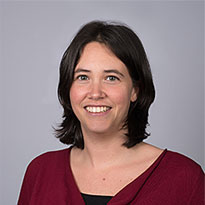
After completing her MSc degree in Irrigation and Water Engineering at Wageningen University, the Netherlands in 2003, Marieke started her professional career in the water, sanitation and hygiene (WASH) sector.
Marieke has been involved in (action) research in various countries, including Ghana, Ethiopia and Bangladesh on issues like small town WASH, integrated urban water management, multiple-use water services, cost recovery and financing, WASH service monitoring and evidence-based decision making. She has also been involved in monitoring, evaluation, process documentation and impact assessments of projects and programmes in the WASH sector, like UNICEF’s ZimWASH Project in Zimbabwe and Vitens’ Sustainable Water Project in Harar, Ethiopia.
She has been working closely with sector stakeholders, including Ministries (e.g. the Ministry of Water Resources, Irrigation and Electricity in Ethiopia) and government agencies (e.g. Community Water and Sanitation Agency in Ghana) in identifying and addressing sector challenges. This has amongst other resulted in the establishment of the national monitoring framework in Ghana and national guidelines for Self-supply in Ethiopia. She has also supported knowledge management and sector learning processes, especially in Ghana and Ethiopia. This has included the development of the Resource Centre Network Ghana (supported by multiple donors, including DGIS, UNICEF and BMGF) and Learning Alliance Platforms in Ghana (including the Accra City Learning Alliance under the EU-funded SWITCH Project and the National Level Alliance Platform in Ghana, established under the BMGF funded WASHCost and Triple-S Projects) and woreda and regional Learning and Practice Alliances in Ethiopia (under the DFID-funded RiPPLE Project).
After completing her MSc degree in Irrigation and Water Engineering at Wageningen University, the Netherlands in 2003, Marieke started her professional career in the water, sanitation and hygiene (WASH) sector.
Marieke has been involved in (action) research in various countries, including Ghana, Ethiopia and Bangladesh on issues like small town WASH, integrated urban water management, multiple-use water services, cost recovery and financing, WASH service monitoring and evidence-based decision making. She has also been involved in monitoring, evaluation, process documentation and impact assessments of projects and programmes in the WASH sector, like UNICEF’s ZimWASH Project in Zimbabwe and Vitens’ Sustainable Water Project in Harar, Ethiopia.
She has been working closely with sector stakeholders, including Ministries (e.g. the Ministry of Water Resources, Irrigation and Electricity in Ethiopia) and government agencies (e.g. Community Water and Sanitation Agency in Ghana) in identifying and addressing sector challenges. This has amongst other resulted in the establishment of the national monitoring framework in Ghana and national guidelines for Self-supply in Ethiopia. She has also supported knowledge management and sector learning processes, especially in Ghana and Ethiopia. This has included the development of the Resource Centre Network Ghana (supported by multiple donors, including DGIS, UNICEF and BMGF) and Learning Alliance Platforms in Ghana (including the Accra City Learning Alliance under the EU-funded SWITCH Project and the National Level Alliance Platform in Ghana, established under the BMGF funded WASHCost and Triple-S Projects) and woreda and regional Learning and Practice Alliances in Ethiopia (under the DFID-funded RiPPLE Project).
After completing her MSc degree in Irrigation and Water Engineering at Wageningen University, the Netherlands in 2003, Marieke started her professional career in the water, sanitation and hygiene (WASH) sector.
Marieke has been involved in (action) research in various countries, including Ghana, Ethiopia and Bangladesh on issues like small town WASH, integrated urban water management, multiple-use water services, cost recovery and financing, WASH service monitoring and evidence-based decision making. She has also been involved in monitoring, evaluation, process documentation and impact assessments of projects and programmes in the WASH sector, like UNICEF’s ZimWASH Project in Zimbabwe and Vitens’ Sustainable Water Project in Harar, Ethiopia.
She has been working closely with sector stakeholders, including Ministries (e.g. the Ministry of Water Resources, Irrigation and Electricity in Ethiopia) and government agencies (e.g. Community Water and Sanitation Agency in Ghana) in identifying and addressing sector challenges. This has amongst other resulted in the establishment of the national monitoring framework in Ghana and national guidelines for Self-supply in Ethiopia. She has also supported knowledge management and sector learning processes, especially in Ghana and Ethiopia. This has included the development of the Resource Centre Network Ghana (supported by multiple donors, including DGIS, UNICEF and BMGF) and Learning Alliance Platforms in Ghana (including the Accra City Learning Alliance under the EU-funded SWITCH Project and the National Level Alliance Platform in Ghana, established under the BMGF funded WASHCost and Triple-S Projects) and woreda and regional Learning and Practice Alliances in Ethiopia (under the DFID-funded RiPPLE Project).
Richard Ward
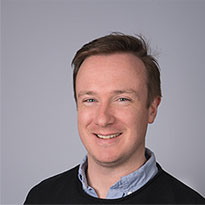
Richard is the manager of IRC Consult. His responsibilities include project acquisition, project management and client liaison for all IRC Consult assignments. He can be contacted to discuss new assignments, opportunities or requests for research, capacity building or technical assistance from IRC staff, associates, and our network of independent consultants and partners.
Prior to joining IRC, Richard worked at Aguaconsult in the United Kingdom (from 2011 to 2016) where he conducted the IRC Consult pilot as well as Qualitative Document Analysis (QDA) research under IRC's Triple-S project and Sustainability Index Tool (SIT) evaluations and developed his knowledge of the WASH sector.
He has a first class degree in Anthropology from University College London and an MA (Distinction) in Development and Rights from Goldsmiths College, University of London, and is interested in governance, policy and the political-economic history of aid and development.
Richard is the manager of IRC Consult. His responsibilities include project acquisition, project management and client liaison for all IRC Consult assignments. He can be contacted to discuss new assignments, opportunities or requests for research, capacity building or technical assistance from IRC staff, associates, and our network of independent consultants and partners.
Prior to joining IRC, Richard worked at Aguaconsult in the United Kingdom (from 2011 to 2016) where he conducted the IRC Consult pilot as well as Qualitative Document Analysis (QDA) research under IRC's Triple-S project and Sustainability Index Tool (SIT) evaluations and developed his knowledge of the WASH sector.
He has a first class degree in Anthropology from University College London and an MA (Distinction) in Development and Rights from Goldsmiths College, University of London, and is interested in governance, policy and the political-economic history of aid and development.
I enjoy connecting the dots between IRC’s broad aims and the specific consultancy assignments we undertake, where impact can be immediate and significant, and new approaches can be applied in different contextsRichard Ward
Richard is the manager of IRC Consult. His responsibilities include project acquisition, project management and client liaison for all IRC Consult assignments. He can be contacted to discuss new assignments, opportunities or requests for research, capacity building or technical assistance from IRC staff, associates, and our network of independent consultants and partners.
Prior to joining IRC, Richard worked at Aguaconsult in the United Kingdom (from 2011 to 2016) where he conducted the IRC Consult pilot as well as Qualitative Document Analysis (QDA) research under IRC's Triple-S project and Sustainability Index Tool (SIT) evaluations and developed his knowledge of the WASH sector.
He has a first class degree in Anthropology from University College London and an MA (Distinction) in Development and Rights from Goldsmiths College, University of London, and is interested in governance, policy and the political-economic history of aid and development.
I enjoy connecting the dots between IRC’s broad aims and the specific consultancy assignments we undertake, where impact can be immediate and significant, and new approaches can be applied in different contextsRichard Ward
About us
For 50 years, IRC has been using evidence-based research and partnership working to achieve WASH services that last.
We know what works: and through IRC Consult we can apply our expertise to your set of challenges.
Read MoreRichard Ward
IRC Consult manager
Marieke Adank
Sector monitoring specialist
Joseph Pearce
Sector monitoring specialist
Juste Nansi
Systems change specialist

Angela Huston
Systems change specialist
Catarina Fonseca
Finance specialist
IRC Consult is driven by the vision of universal access to water, sanitation and hygiene services by 2030. It is our mission to deliver specialist services that support and strengthen strong national systems at district and national level that can deliver and maintan WASH services for all.
Read moreLatest assignments
Learn about the latest exciting projects we have been involved in over the past months.
Evaluating WaterWorX
Looking into the sustainability of Water Operator Partnerships
A mid-term review of 20 Water Operators Partnerships
The sanitation business
Evaluation of a social enterprise supported by Water.org
A check on capacity, finance and sales
Enterprise challenges in reaching the market
Learning with Woord en Daad
A systems view on Woord en Daad’s Sustainable Water Program
Working towards a new multi annual strategy
Getting a global overview
Seeking the ideal conditions for sustainable rural water services
Global study on sustainable service delivery models for rural water in 16 countries.